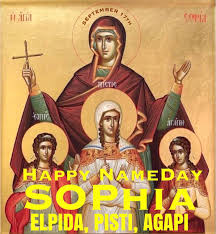
DEAR SOPHIA,
I NAMED YOU AFTER THE CHURCH IN CONSTANTINOPLE, ST. SOPHIA, WHICH STANDS FOR WISDOM, NOT FOR HER DAUGHTERS. I KNOW YOU POSSESS WISDOM, COMPASSION AND A SENSE OF JUSTICE. TODAY IS YOUR NAME DAY AND IT IS ACTUALLY MORE IMPORTANT THAN YOUR BIRTHDAY. NEXT YEAR, WE WILL CELEBRATE TOGETHER. I WILL SEE YOU SOON.
143
LOVE,
DAD
Biography of St. Sophia
St. Sophia is a revered figure in the Eastern Orthodox Church, and is venerated as a saint and a martyr. The name “Sophia” is Greek for “wisdom”, and it is believed that she represents the wisdom of God.
There are several saints named Sophia in the Orthodox tradition, but the most well-known is St. Sophia and her three daughters, Faith, Hope, and Love. They were said to have been martyred during the Roman Empire in the 2nd or 4th century AD, although the details of their story are not well-documented.
According to tradition, St. Sophia and her daughters were persecuted for their Christian faith and refused to renounce their beliefs, even under torture. They are said to have been thrown into a burning furnace, but miraculously emerged unscathed. This led to many converts to Christianity, and the women were eventually martyred for their faith.
The story of St. Sophia and her daughters is commemorated in the Eastern Orthodox Church on September 17th, the day on which they are believed to have been martyred. The feast day is particularly important in the Russian Orthodox Church, and is celebrated with great solemnity.
The story of St. Sophia and her daughters is also significant in that it is seen as an example of the power of faith and the strength of the human spirit in the face of persecution. The women’s willingness to suffer and die for their beliefs is seen as a powerful testimony to the truth of the Christian faith, and their story continues to inspire people to this day.
The church of St. Sophia in Istanbul is a major tourist destination, and it is one of the most important Byzantine landmarks in the city. The original structure of the Church of St. Sophia built by Emperor Justinian I, in the 6th century, as the principal church of the Eastern Orthodox Church, which was later converted to a mosque in 1453 after the fall of Constantinople. Now days, it is now a Museum, under the name of Hagia Sophia Museum.
 Fanady blog
Leave a comment